
Back to Pre-Loss Condition: 5 Ways to Prepare for Property Damage
 Sarah Chadwick : May 28, 2025
Restore properties faster and smarter. Five tips for property managers to plan ahead and get back to pre-loss condition without the chaos.
Property damage doesn’t just create a repair problem. It creates a business problem. Operations slow down, costs start stacking up, and pressure builds from every direction.
Risk managers are often brought in once the situation is already moving. At that point, the focus shifts quickly from “what happened” to “how do we get back to normal?”
What’s less obvious is what actually drives the outcome. It’s not just the type of loss or the size of the building. In many cases, it comes down to a handful of decisions and moments during the restoration process that carry more weight than expected.
Most restoration projects follow a familiar path. Mitigation starts, assessments are done, and repairs move forward. But the factors that affect cost, downtime, and claim outcomes tend to sit just below the surface.
These are the areas experienced risk managers watch closely because they know how much they can influence the final result.
Early response shapes everything that follows. The initial decisions around containment, mitigation, and site control can either stabilize the situation or allow it to grow.
This isn’t just about showing up quickly. It’s about knowing what to prioritize, what to document, and how to prevent the loss from expanding. When handled well, those first steps can shorten the overall timeline and reduce total cost.
What you see at the start is not always the full picture. Once work begins, hidden issues often come to light. Moisture behind walls, damage within systems, or materials that need to be replaced rather than repaired.
Experienced teams plan for this. They build flexibility into the process and communicate early about what could change. That keeps projects moving forward without constant resets or surprises.
The cost to repair damage is only part of the equation. Lost productivity, paused operations, and disrupted workflows can have a much larger impact on the business.
This is where restoration strategy matters. Decisions that prioritize access, phased work, or partial reopening can make a meaningful difference. The faster operations can resume, even in stages, the more you protect the business as a whole.
Good documentation does more than check a box. It supports the claim, answers questions before they are asked, and keeps the process moving with fewer delays.
When reports, photos, and logs are clear and consistent, it’s easier for adjusters and stakeholders to stay aligned. That reduces back-and-forth and helps avoid unnecessary slowdowns.
Getting back to pre-loss condition doesn’t always mean going back to the exact same setup. Some losses reveal weak points that can be addressed during the rebuild.
Simple changes in materials, layout, or systems can reduce the chance of repeat issues. It’s not about overbuilding. It’s about making practical improvements while the work is already underway.
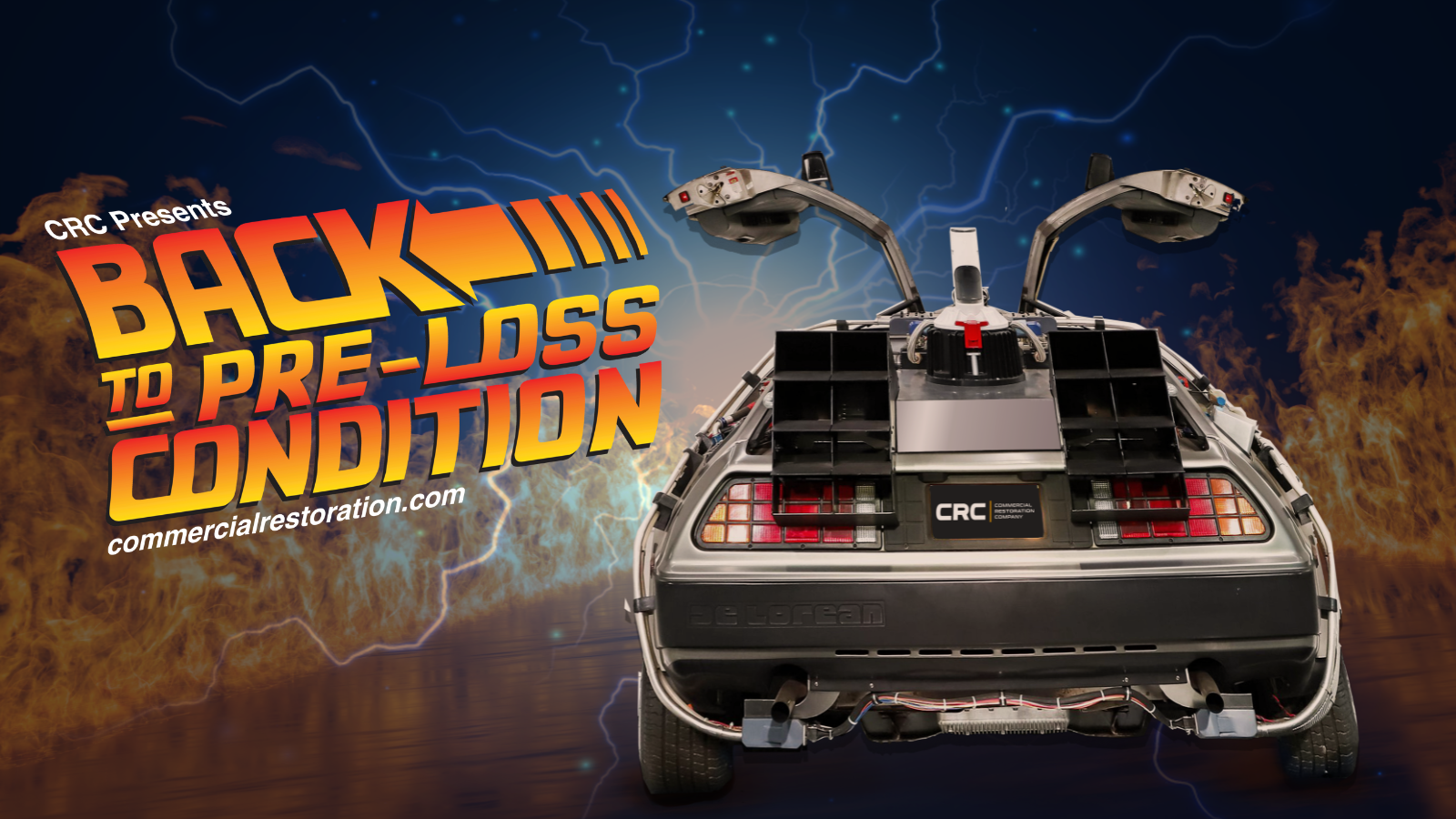
Think of it like the DeLorean. It still gets you where you need to go, but it’s better prepared for what’s ahead.
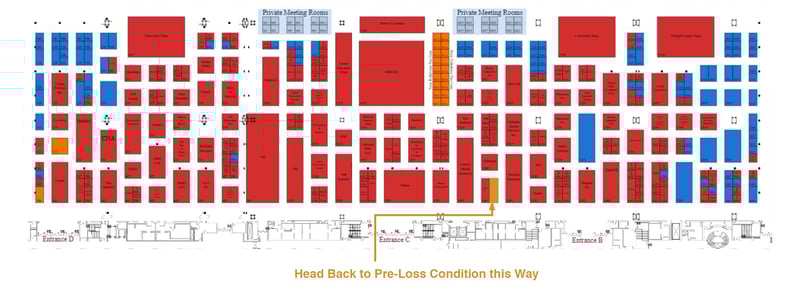
We’ll be at RISKWORLD, May 3–6 in Philadelphia. Stop by Booth 2000 to connect with the CRC team.
We’re bringing the DeLorean Time Machine as part of our “Back to Pre-Loss Condition” campaign. Stop by to check it out, grab a photo, and enter for a chance to win a LEGO DeLorean kit.
While you’re there, you can:
Here's where you can find us in the exhibit hall:
Property losses don’t wait, and once they happen, things move quickly. Having a plan and the right partners in place ahead of time makes the process a lot more manageable.
Whether you’re in the middle of a loss or thinking about how to tighten up your response plan, CRC works with risk managers to map out what that process should look like. That way, when something does happen, your team isn’t starting from scratch.
If you’d like to connect at RISKWORLD, schedule a time with us. We’re always open to talking through your current approach and where things can run more smoothly.
Because getting back to pre-loss condition should feel like a process you’re ready for, not one you’re figuring out in real time.
Sarah Chadwick : May 28, 2025
Restore properties faster and smarter. Five tips for property managers to plan ahead and get back to pre-loss condition without the chaos.
Visit CRC at PLRB Booth 1517 to learn how we restore properties to pre-loss condition. Get your photo with the DeLorean Time Machine!
Visit CRC at the Claims Conference Booth 1426 to learn how we restore properties to pre-loss condition. Get a photo with the DeLorean Time Machine!